搜索:

題目:Advancing Reaction Engineering: Paving the Way for a Circular Chemical Industry with the Help of AI
時(shí)間:2025年5月12日 9:00-11:30
地點(diǎn):機(jī)械與動(dòng)力工程學(xué)院 F310會(huì)議室
邀請(qǐng)人:齊飛 教授、周忠岳 副教授(航空動(dòng)力研究所)
Biography
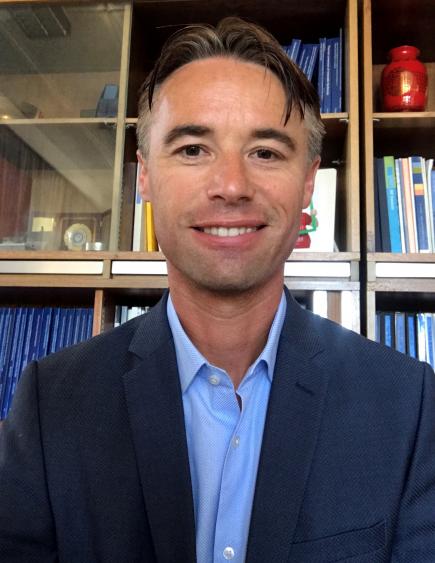
Professor Kevin Van Geem is a leading global expert in chemical reaction engineering, particularly in electrification and chemical recycling of plastic waste. An ERC grant recipient (Consolidator 2019, Advanced 2024, proof of concept 2025) and consistently ranked in Stanford's top 2% of scientists, his expertise spans kinetic modeling, process simulation, material characterization, and multiscale model development for chemical processes.
He is active in process intensification and is initiating groundbreaking research in electrification, CO2 utilization, and industrial process optimization.
Professor Van Geem creatively integrates interdisciplinary methods and is a world-leading researcher in chemical recycling and olefin production. He leads and contributes to numerous projects focused on sustainable plastics, including OPTIMA, e-CRACKER, PREFER, CYCLOPS, WATCH, and the C-PlaNeT training network.
Abstract
The transition towards a circular economy, characterized by closed material cycles, is paramount for the chemical industry's sustainable future. This shift from a linear “take-make-dispose” model demands innovative solutions across the value chain, with reaction engineering at the forefront of enabling resource efficiency, waste minimization, and material recovery. This plenary talk will explore the critical role of advanced reaction engineering in realizing a chemical industry where valuable materials are continuously reintegrated, ideally driven by renewable electricity.
Achieving closed material cycles presents complex challenges, from developing novel catalysts for diverse waste streams to designing intensified and electrified reactors for fluctuating feedstocks. This talk will focus on key areas where reaction engineering advancements are proving instrumental.
A crucial aspect is the chemical recycling of plastics. The talk will highlight breakthroughs in pyrolytic, supercritical and catalytic recycling processes, reactor design for heterogeneous plastic waste, and their industrial integration. Challenges related to feedstock variability and robust catalytic systems will be emphasized.
Another vital area is the utilization of CO2 as a feedstock. Carbon capture and utilization (CCU) can mitigate emissions while creating valuable chemicals and fuels. Reaction engineering is key to designing efficient catalytic processes for CO2 conversion into CO, methanol, formic acid, and hydrocarbons.
Finally, the talk will highlight the role of digitalization and advanced modeling. CFD, kinetic modeling, and machine learning are crucial for understanding reaction networks, optimizing reactor performance, and predicting catalyst behavior, accelerating innovation and de-risking scale-up.
In conclusion, realizing a circular chemical industry necessitates advancements in reaction engineering. By focusing on novel catalysts, innovative reactors, process intensification, and digital tools, reaction engineers can pave the way for a future where waste is minimized and resources are valorized. This talk aims to inspire the audience to contribute their expertise to building a more sustainable chemical future.




上海交大
機(jī)械動(dòng)力學(xué)院



上海交大
機(jī)動(dòng)本科教務(wù)辦



SJTU機(jī)動(dòng)研教辦



上海交大
機(jī)動(dòng)校友辦



上海交大MEM



SJTUME基礎(chǔ)實(shí)驗(yàn)與創(chuàng)新實(shí)踐



SJTUME錘錘


上海交大
機(jī)動(dòng)研究生會(huì)



ME微紅旗



ME礪遠(yuǎn)學(xué)術(shù)



SJTUME職業(yè)發(fā)展中心
 學(xué)院OA系統(tǒng)
 jAccount登錄
 ENGLISH


 地址:上海市東川路800號(hào)上海交通大學(xué)閔行校區(qū)機(jī)械與動(dòng)力工程學(xué)院
 郵編:200240
 Email:sjtume@sjtu.edu.cn